Did you know that more than 33 million Americans are living with Food Allergies—including 1 in 13 Children?
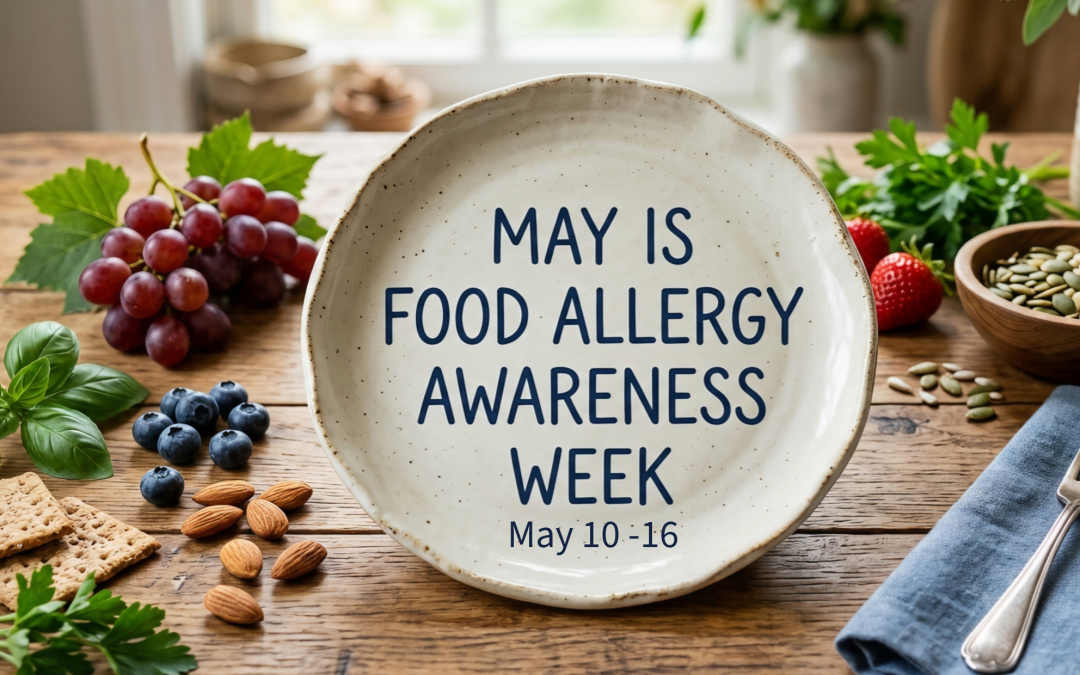
Food Allergy Awareness Week is May 10th to May 16th, 2026. According to the Asthma and Allergy Foundation of America (AAFA), it’s “a time to help people learn about food allergies and related allergic diseases, risk factors, symptoms and treatment.”
According to Food Allergy Research & Education (FARE), a food-related allergic reaction sends someone to the Emergency Room every 10 seconds. And more than 40% of children with food allergies have experienced at least one life-threatening allergic reaction!
Food Allergy Quick Facts!
- Food allergies are not a diet or a choice! They are an officially recognized disease of the immune system, and capable of causing life-threatening reactions known as anaphylaxis.
- Food Allergies have been around for thousands of years! While allergic disease—including food allergies—was classified in modern terms in 1912, there are cases referenced in texts from Ancient Greece, Rome, and China!
- The 9 most common food allergies in the U.S. are dairy, eggs, peanuts, tree nuts, soy, wheat, fish, shellfish, and sesame. But any food can be an allergen, and new allergies can develop at any point in a person’s life. It is even possible to have multiple allergies!
- Antihistamines are not enough to treat a severe allergic reaction! Epinephrine is the ONLY treatment that can stop anaphylaxis—which can be deadly. Epi First, Epi Fast!
- Every allergic reaction must be taken seriously! While reactions can be mild, a history of previous mild reactions does NOT guarantee the next one won’t be severe. Even a reaction that appears mild at first can quickly become severe without any warning.
- Even indirect contact with a known allergen can cause a life-threatening reaction! Knowing how and where food is prepared, reading labels on everything, and asking questions to servers, chefs, and manufacturers is essential to living with allergies. Sensitivity levels vary from person to person, so information is key!
- It’s about more than just food! Allergens love to hide in other items as well—and often under names we don’t normally recognize. Soaps, skincare products, hair products, cosmetics, household cleaning products, and arts & crafts supplies are only a few of the non-food items where common food allergens can be found.
How Can I Support Someone with Food Allergies?
First and foremost, Learn How to Spot an Allergic Reaction
Symptoms of an allergic reaction can generally start within seconds of exposure or even take hours to appear. Here are some symptoms to look for:
|
SEVERE SYMPTOMS Call 911 and administer Epinephrine for any ONE of these!
|
MILD SYMPTOMS Call 911 and administer Epinephrine for any TWO of these! · Mild nausea or discomfort · Itchy mouth · Hives or skin irritation · Sneezing or runny, itchy nose |
Learn How to Use Epinephrine Devices:
Other ways you can support your allergic friends, neighbors, and loved ones:
- Allow them to bring their own food to family and community events…
- …Without judgement, eye rolling, comments, or jokes.
- Let them choose the restaurant!
- People with allergies tend to be pros at researching places and will know which questions to ask.
- Don’t roll your eyes or complain the next time the person next to you on the airplane asks you to refrain from opening that bag of peanuts or pistachios!
- Some people’s allergies are so high-risk that even touching or breathing around their trigger food can be enough to cause a life-threatening reaction. Save your snack for later–it costs nothing to be kind.
- If you know a child with food allergies, be careful not to offer them food without a caregiver’s prior approval.
- Younger children may not fully understand their allergies yet and may accept any treat from someone they trust—leading to a potentially deadly game of Eat and Ask Questions Later.
- If you’re having a celebration that includes children, to include activities or treats that don’t involve food.
- Small toys are a great substitute for trick-or-treating at Halloween, can easily be placed into plastic eggs in lieu of candy at an Easter Egg Hunt, and make great stocking stuffers at Christmas time. Kids just want to be included, and the easier we make it on them, the better for everyone!
- And if you’re feeling particularly generous, there are great organizations like FARE, AAFA, the Natasha Allergy Research Foundation, and Red Sneakers For Oakley, who work tirelessly to not only raise awareness, but also to research allergic disease and improve available treatment options. Consider taking the time to learn more about the condition and perhaps even donate to the cause. Every step gets us closer to a potential cure!
How Can Insurance Help?
If you need help understanding your health insurance coverage, finding an Allergist in your plan’s network, or want to discuss your options for accessing these often-expensive lifesaving medications, click here to schedule with one of our agents!
If you or your child has allergies, be sure to talk to your doctor about creating an Allergy Action Plan. Preparation is Power!
Where Can I Learn More?
To learn more, please visit FoodAllergy.org, KidsWithFoodAllergies.org, AAFA.org, RedSneakers.org, NARF.org.uk, and SnackSafely.com.